
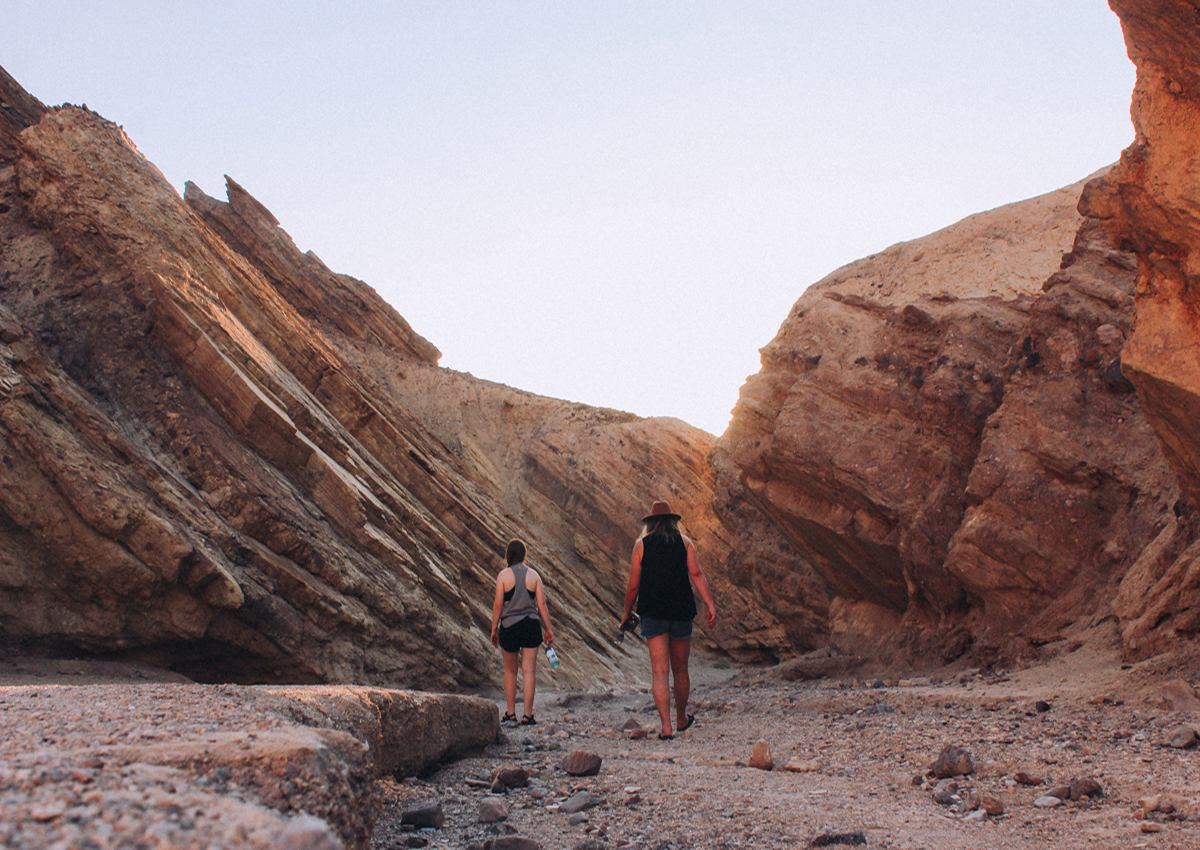
17 Top Things to do in Death Valley National Park
Death Valley National Park is one of the most fascinating national parks I’ve ever visited. I count it in my top five favorite parks. And it’s right up there with the Grand Canyon, Yosemite and Yellowstone as parks everyone should visit at least once.
With it’s huge size and rugged landscape, you could easily spend weeks and still not see it all but if you have a day, or better yet, a few days, this list features some of the top things to do in Death Valley National Park.
Planning Your Visit to Death Valley
Death Valley National Park is very unique – it holds the record for the highest officially recorded temperature on Earth at 134°F (57°C), it’s the lowest point in North America and it’s the biggest national park in the lower 48 states.
Because of its size, it contains more than 1,400 miles of roads – many of them suitable only for high-clearance, 4wd vehicles. Knowing exactly what to expect before you get there is essential. A good plan and a list things to do in Death Valley National Park will help you stay organized and on track.
Finally, even though Death Valley is one of the driest places in the U.S., it’s important to check the weather before you go. In monsoon, the park is prone to flash-flooding which could impact your visit. When planning your trip, the park website can help you stay informed about park alerts and road closures.
Things to do in Death Valley National Park
1. Dante’s View
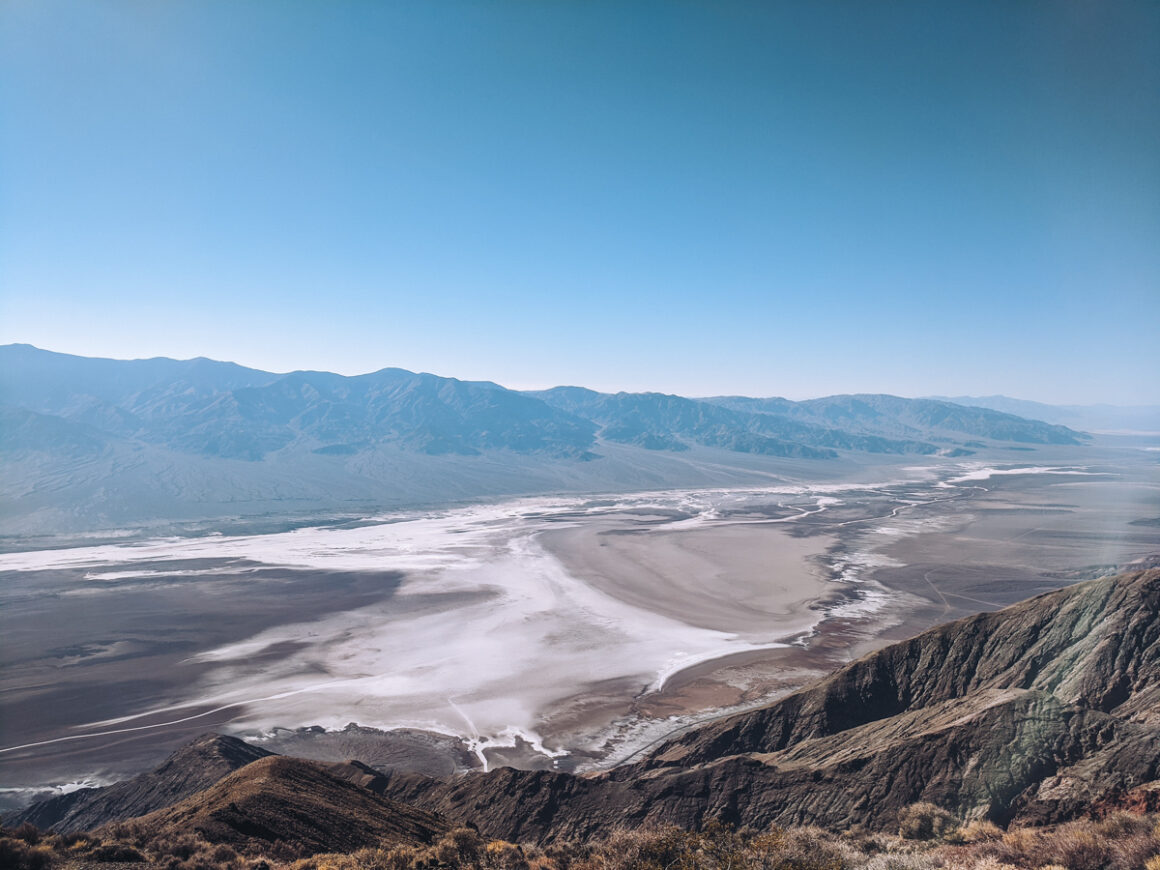
If you enter from the east or drive to Death Valley from Las Vegas, Dante’s View should be one of the first stops you make in the park. Not only is it one of the best things to do in Death Valley National Park but it’s the perfect introduction to the park and its terrain and surroundings.
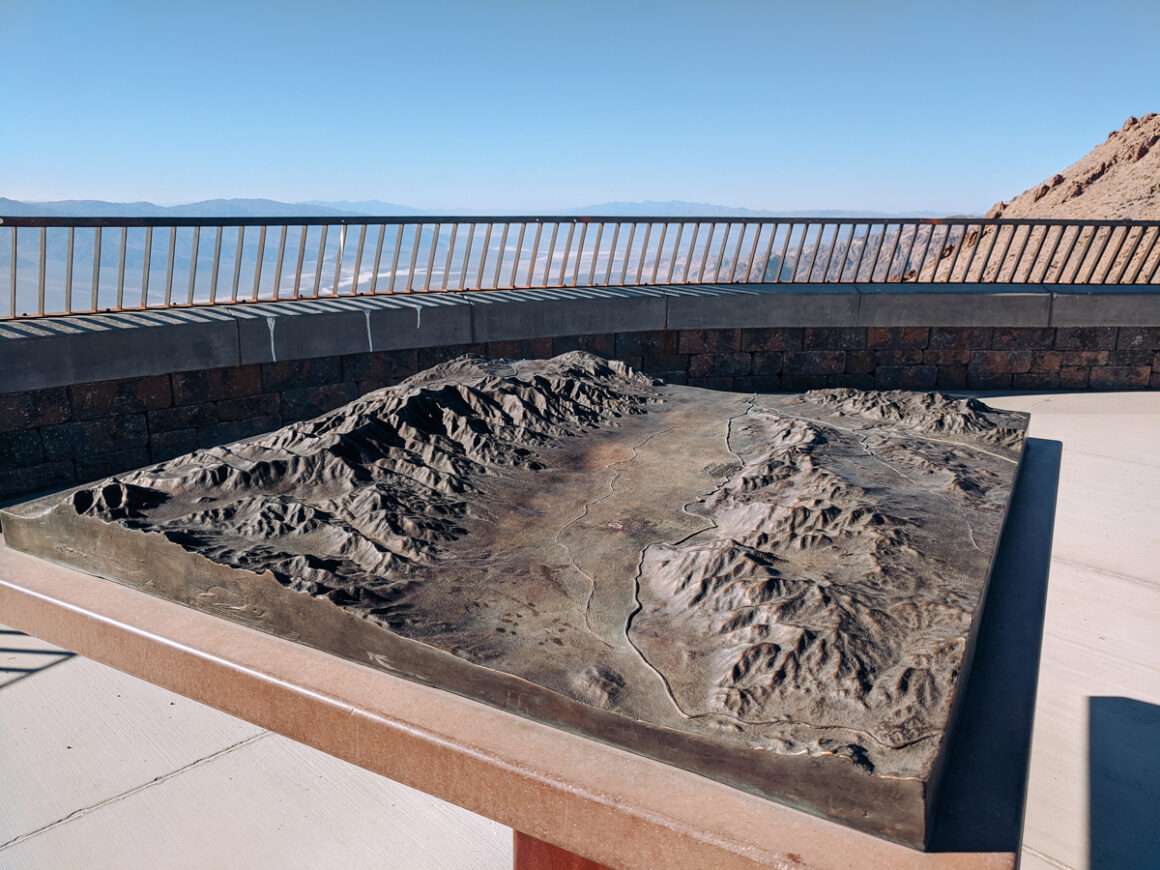
At 5,500 feet above sea level, the view here is a gorgeous, panoramic view of the entire area, and the nearby mountain ranges. It also features an informative topographical map of the Death Valley that helps visualize the region and get your bearings.
Just below the the viewpoint lies the salt flats of Badwater Basin, the park’s lowest point. Across the flats to the west is the Panamint Mountain Range with Telescope Peak – the highest point in Death Valley National Park. From this unique vantage you can see both the lowest point in Death Valley and the highest point at the same time.
How to Get There
- Road / Highway: Dante’s View spur off CA-190
- Vehicle Restrictions: Vehicles longer than 25 feet not allowed; trailer parking available at entrance
- Parking: Small lot at the end of the road; trailer lot at road entrance on 190
- Best Time to Visit: Early morning for best light and fewer crowds; sunset is popular but arrive early for parking
- Tips / Notes:
- Bring water and a jacket (higher elevation means cooler temperatures)
- Check road conditions in advance
- Great spot for panoramic views and photography
2. 20 Mule Team Canyon
Since the 1870’s, white gold – or borax – has been mined in the mineral rich Death Valley region. In the past, the only way to transport the borax out of the valley was in wagons – pulled by teams of eight or ten team horses and mules. Even with that many animals, they struggled to move the wagons in the harsh valley conditions.
To compensate, one creative miner came up with the idea of combining two ten-mule teams to haul the borax out of the valley. And voila – the 20 Mule Team name was born. Over the years, mule teams carried millions of pounds of borax out of Death Valley and the name “20 Mule Team” became so popular, it still appears boxes of Borax today.
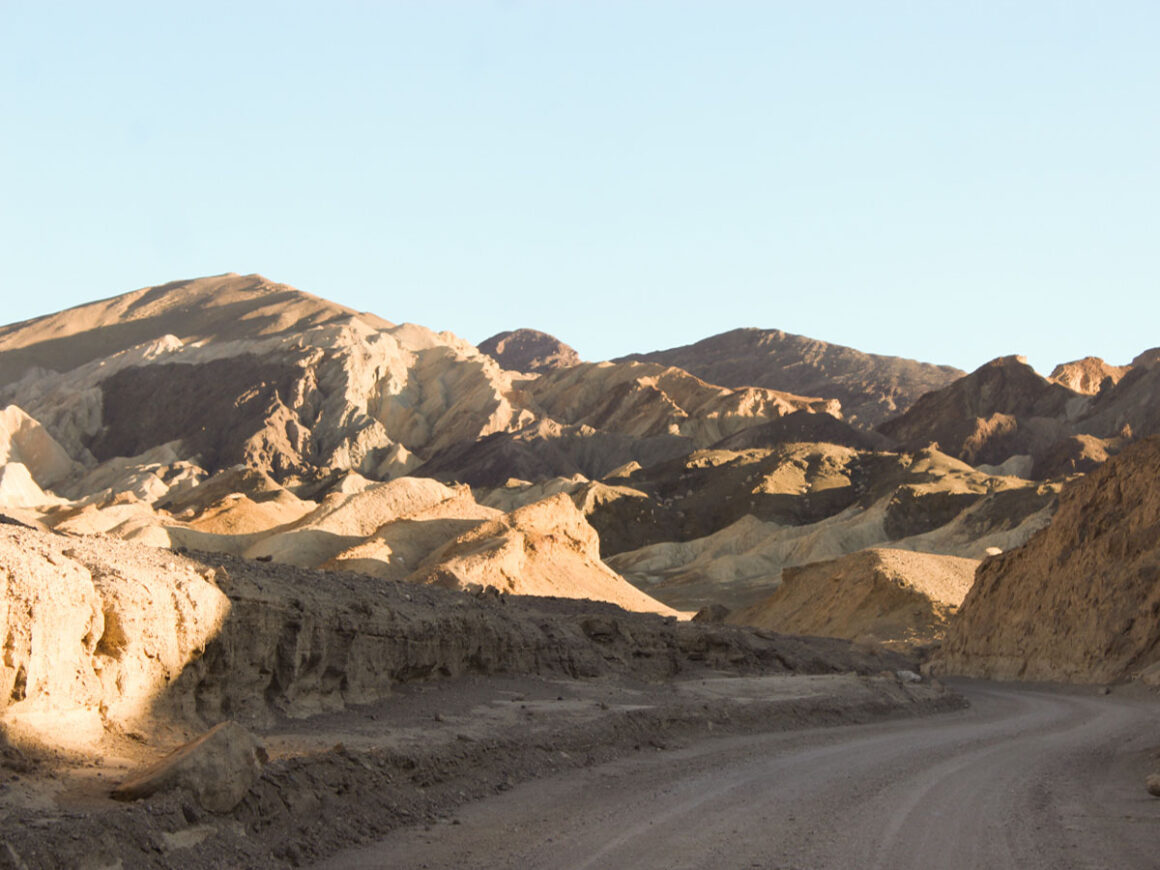
Death Valley’s 20 Mule Team Canyon isn’t the exact route that was used by the mules teams on their journey out of the valley but it’s similar. Driving through the canyon gives you an idea of the difficulties the mules and drivers faced back then. Imagine spending – at minimum – ten days with a team of mules – and not in your air conditioned car – in one of the hottest, most dangerous parts of the country.
How to Get There:
- Road / Highway: CA-190
- Vehicle Restrictions: Road is unpaved but generally safe for regular cars; avoid if it has recently rained
- Parking: Small parking area at the trailhead/entrance
- Best Time to Visit: Early morning or late afternoon for best light and cooler temperatures
- Tips / Notes:
- The road is one-way and 2.5 miles long
- Bring water and sun protection, especially in summer
- Check road conditions before you go, as rain can make the route impassable
3. Furnace Creek Visitor Center
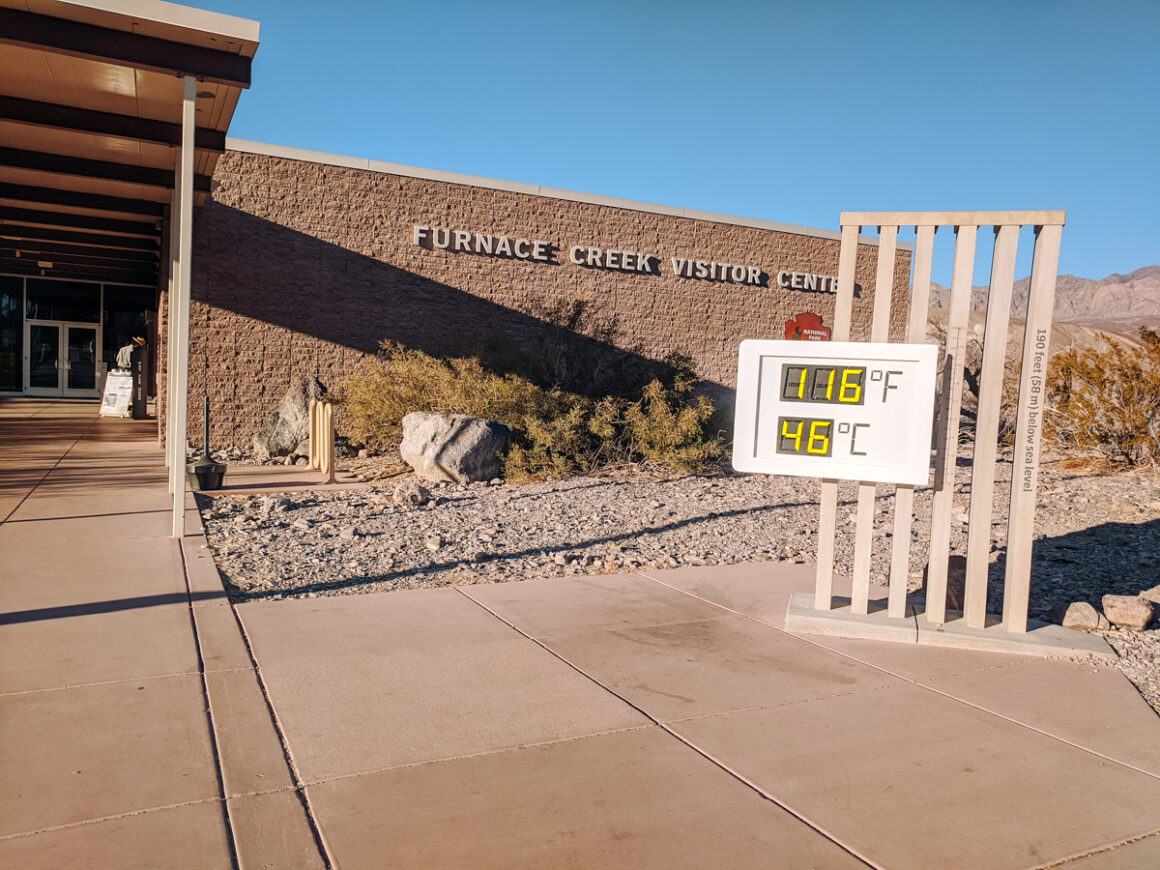
A stop at the Furnace Creek Visitor Center is a must and another good introduction to Death Valley National Park. Plus, it’s the best way to stay informed about what’s going on in the park or any closures. You can pick up maps, chat with rangers and learn about programs or special events going on.
One of the park’s most photographed attractions is also located here: the official Death Valley thermometer, which monitors the temperatures across the park. Even if you’re just driving through the area, seeing the thermometer is a fun experience and one of the must-see things to do in Death Valley National Park.
How to Get There
- Road / Highway: CA-190
- Vehicle Restrictions: None; standard vehicles are fine
- Parking: Shaded parking available at the visitor center
- Best Time to Visit: Anytime during operating hours, 8 am – 5 pm
- Tips / Notes:
- Restrooms and water are available
- Stop here for park information and the park bookstore
- Ideal first stop before exploring other areas of the park
- Get your National Park Passport Stamped
4. Zabriskie Point at Sunset
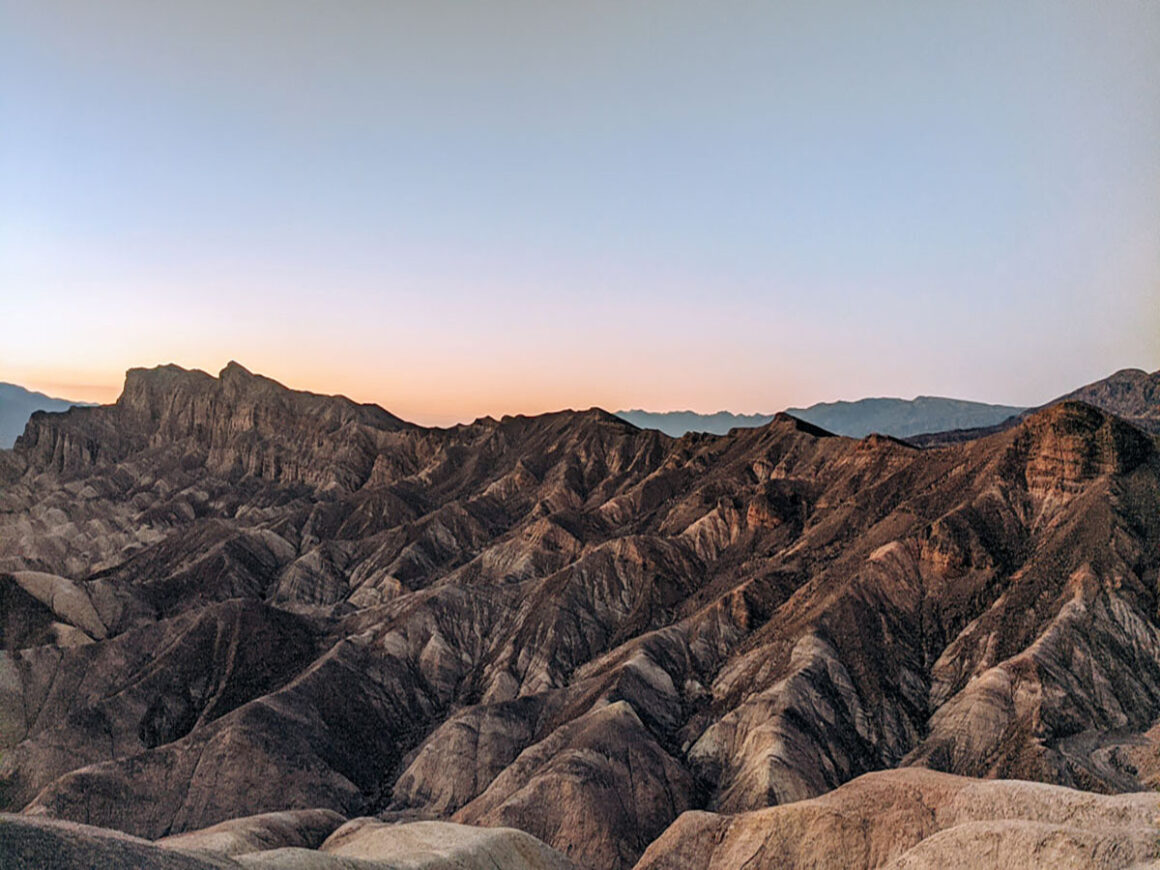
Hands down, spending time at Zabriskie Point is one of my favorite things to do in Death Valley National Park. Located in the Amargosa Range of the park, Zabriskie Point is full of colorful landscapes made up of sediment from Furnace Creek Lake – a lake that dried up long before Death Valley as we know it came into existence.
Zabriskie Point is gorgeous any time of the day but it’s really beautiful at sunset. As the evening light intensifies, the different colors and hues come out, with a glow that softens the peaks and valleys. It’s the ideal place to sit and relax after a long hot day. The overlook has a wall that you can perch on but I suggest bringing a chair and a snack or beverage.
How to Get There
- Road / Highway: CA-190
- Vehicle Restrictions: None; standard vehicles are fine
- Parking: Large lot at the trailhead
- Best Time to Visit: Sunset for the best colors; early morning is quieter
- Tips / Notes:
- The walk to the viewpoint is gentle but slightly uphill
- Bring water and sun protection, especially in warmer months
- Excellent spot for photography and panoramic views of the badlands
4. Badwater Basin Salt Flats
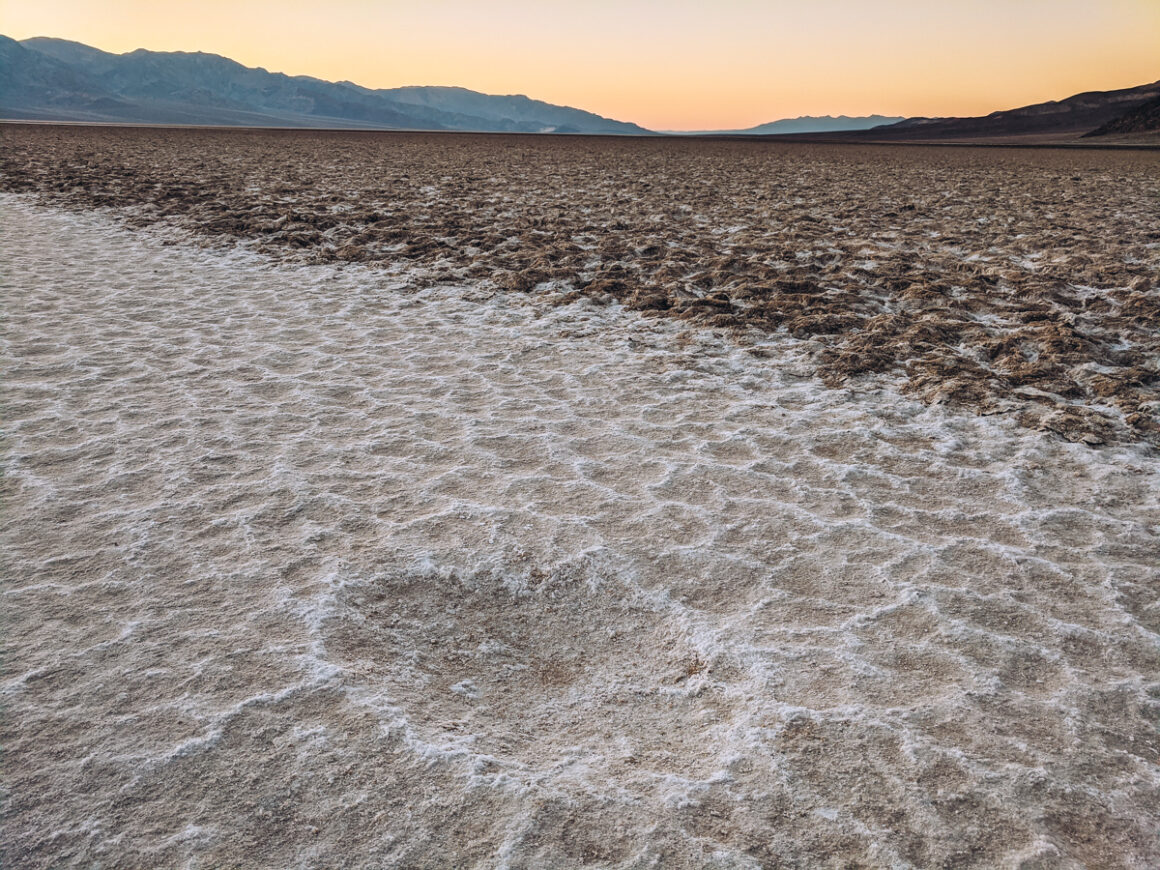
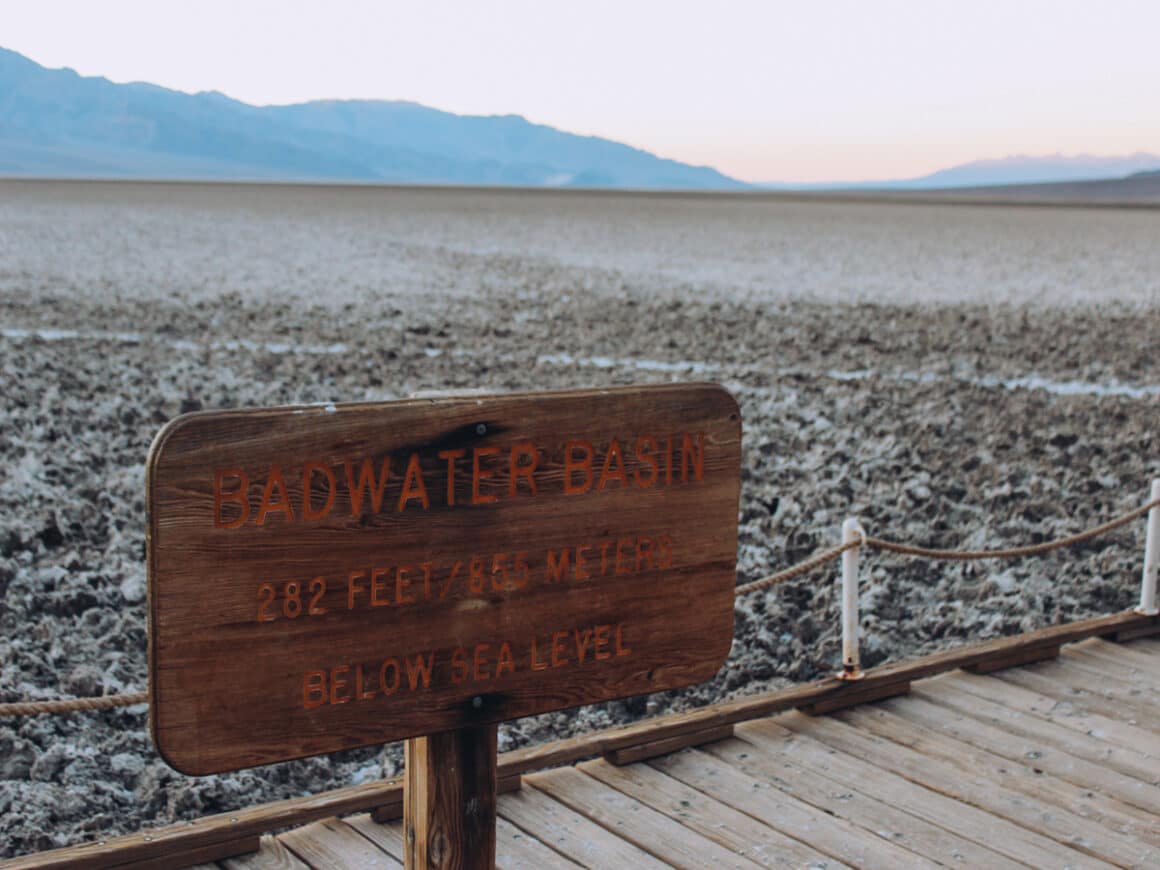
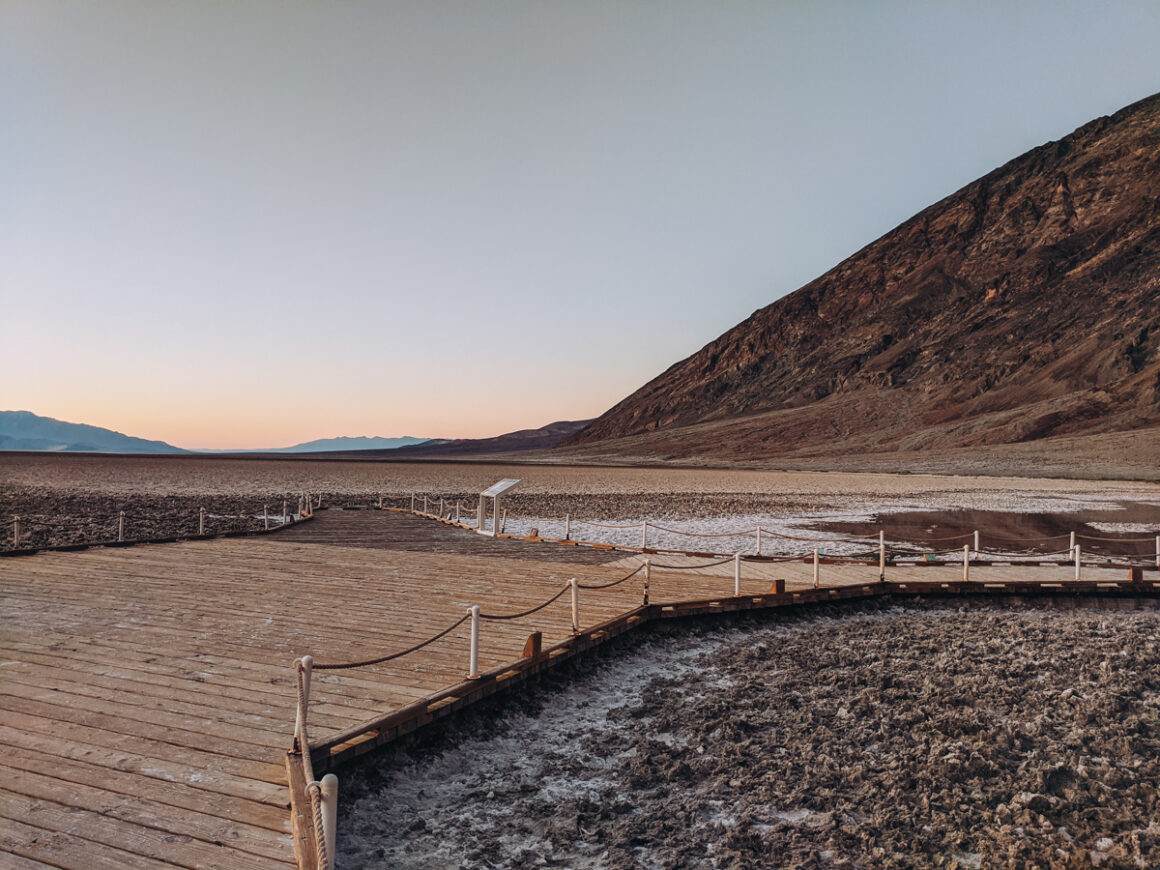
Created by movements in the earth’s crust, Badwater Basin is one of the most well-known sites in Death Valley National Park. At 282 feet below sea level, it’s the lowest point in North America. In wetter climates, this area would be covered by water but in Death Valley’s dry heat, rainfall evaporates quickly and leaves behind the crusty shapes in the salt flats.
While there is an assessible wooden boardwalk and a viewing platform, the best way to experience the flats is by walking out onto them. The further you go, the fewer people you’ll encounter and the larger the salt patterns become. Badwater is also a top spot for sunrise, sunset, or even a full moon, when the white salt appears to glow in the moonlight.
In the last couple of years, Death Valley has seen the return of Lake Manly – a rare and temporary lake that forms in Badwater Basin after more rainfall than normal. When it appears, it draws large crowds. When I visited (Dec 2025) the lake was present and the area was extremely busy, with parking filling up quickly along Badwater Road.
If you visit during one of these rare periods, plan to be patient, allow extra time for parking and expect heavier foot traffic than usual. It was windy the day I was there so I wasn’t able to get much reflection off the water but it was an amazing sight to see. I highly recommend visiting while it’s there.
How to Get There
- Road / Highway: Badwater Road off CA-190
- Vehicle Restrictions: None; standard vehicles are fine
- Parking: Large parking lot onsite
- Best Time to Visit: Sunrise or sunset for the best light and fewer crowds; May through October for more defined salt patterns
- Tips / Notes:
- Restrooms are available at the parking lot
- Bring sun protection and water, especially in warmer months
- Walking out onto the flats is optional but highly recommended
- Consider timing your visit for moonlit nights for a unique experience
Southerner Says: While on the viewing deck at Badwater Basin, turn around and look toward the parking lot and mountains behind it. There’s a sign above the parking lot marking sea level, giving a striking sense of just how far below that level you are.
5. Hike Golden Canyon
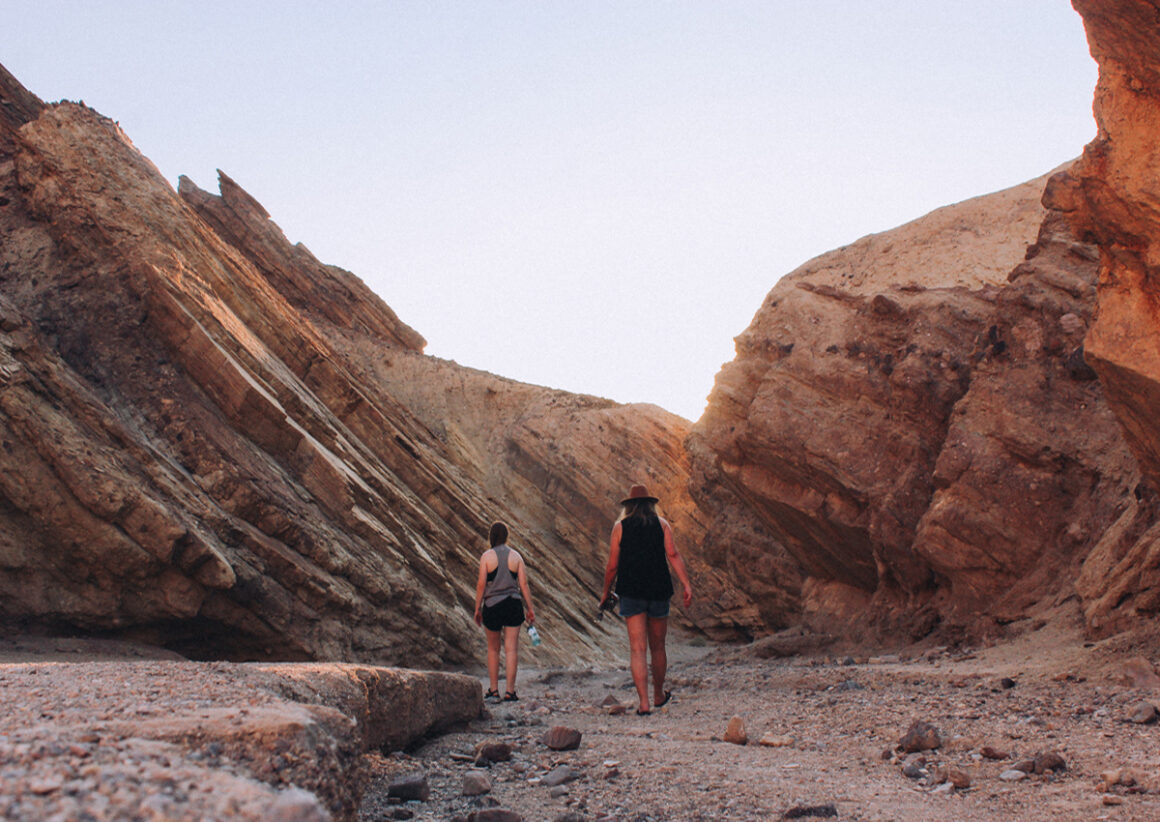
Hiking in Death Valley’s heat can be challenging, but the Golden Canyon Trail is one trail that’s worth it – especially in the cooler hours of the day. The trail winds through unique geology and rock formations and leads to one of the park’s most striking features, Red Cathedral.
The full hike is about 3 miles round trip, but if temperatures are high, you don’t have to go all the way. Turn around whenever you feel comfortable – the trail is just as beautiful on the way back. In the evening, the rocks take on vibrant colors as the sun sets, making it feel as if someone has flipped a light switch on the canyon walls.
How to Get There
- Road / Highway: Access via Badwater Road
- Vehicle Restrictions: None; standard vehicles are fine
- Parking: Parking lot at the trailhead with vault toilets
- Best Time to Visit: Early morning or late afternoon to avoid the heat
- Tips / Notes:
- Carry plenty of water
- Wear sun protection and sturdy shoes
- Hiking all the way to Red Cathedral is optional; you can turn around at any point
- Sunset transforms the canyon walls into glowing shades of red and gold
6. Explore Artist Drive
Artist’s Drive is one of the most popular scenic drives in Death Valley National Park. It’s an easy, one-way paved road, making it perfect for days when it’s too hot to hike or for visitors who prefer minimal walking.
The road winds through hills painted in a striking array of colors, so vivid you can almost reach out and touch them from your car. While there aren’t formal trails along the drive, multiple pullouts provide convenient parking spots where you can step out and explore on foot.
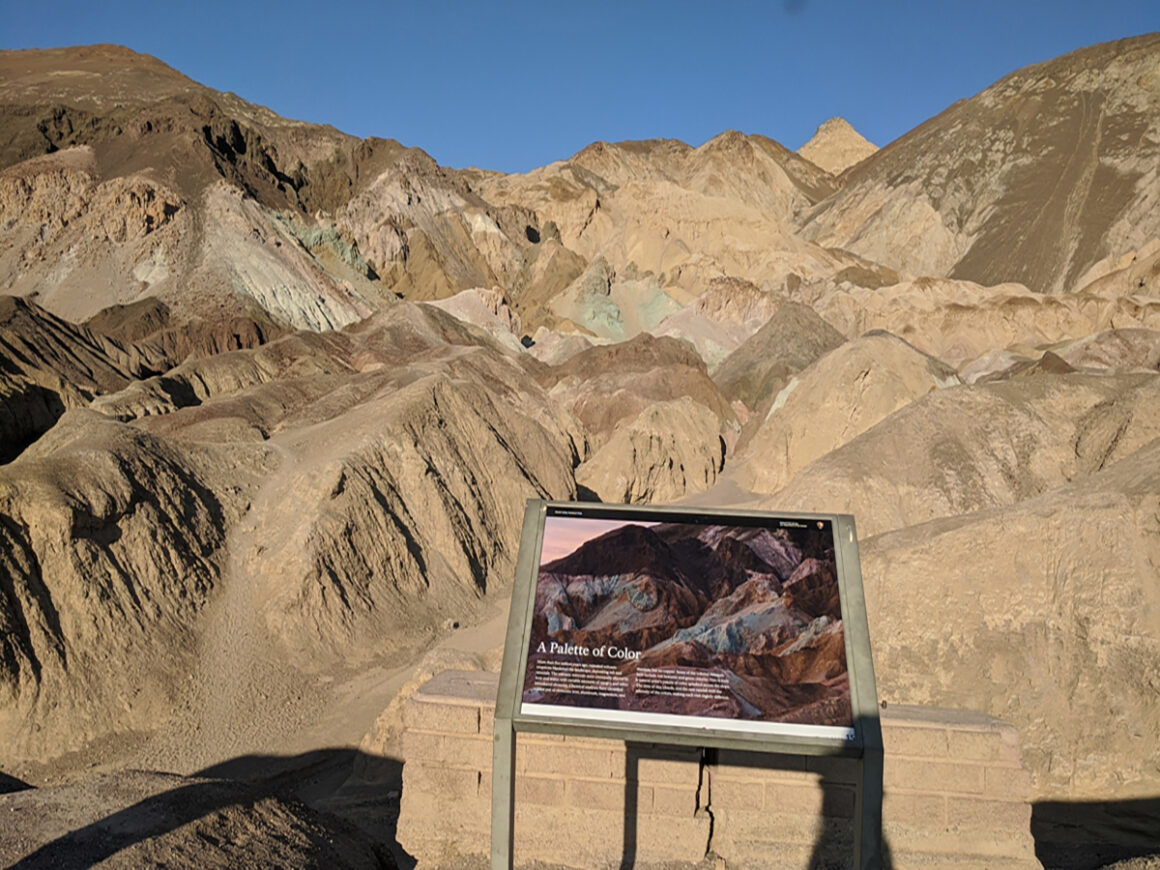
Don’t be disappointed if the colors at Artist Palette are more muted than what you’ve seen in photos. The vibrancy of the hills varies greatly depending on recent rainfall and the amount of moisture in the ground, which can dramatically enhance – or soften – the colors you see.
How to Get There
- Road / Highway: Artist’s Drive off Badwater Road
- Vehicle Restrictions: No RVs, buses, or trailers over 25 feet
- Parking: Pullouts along the drive
- Best Time to Visit: Early morning with the sun in the east or at sunset for optimal colors
- Tips / Notes:
- Ideal for hot days when hiking isn’t practical
- Bring water, sunscreen, and a hat even for a short walk
- Photography opportunities are best at sunrise or sunset
7. Walk Through Artist Palette
Artist Palette is one of the most Instagram-famous spots along Artist Drive, known for its vibrant hills. The stunning colors come from volcanic deposits containing compounds of iron oxides and chlorite, giving the landscape the appearance of an artist’s palette—or a rainbow.
Depending on the time of day and recent rainfall, you may see shades of red, orange, yellow, blue, pink, and even green. The colors are especially vivid during early morning, late afternoon, or after a rain.
How to Get There
- Road / Highway: Parking lot via Artist Drive
- Vehicle Restrictions: Standard vehicles; follow Artist Drive restrictions (no RVs/buses/trailers over 25 feet)
- Parking: Small parking lot at the overlook
- Best Time to Visit: Early morning, late afternoon, or after rain for the most vibrant colors
- Tips / Notes:
- Bring plenty of water if you plan to hike around
- Sun protection is recommended even for short walks
- Colors shift with the light, so consider revisiting at different times of day
8. Devil’s Golf Course
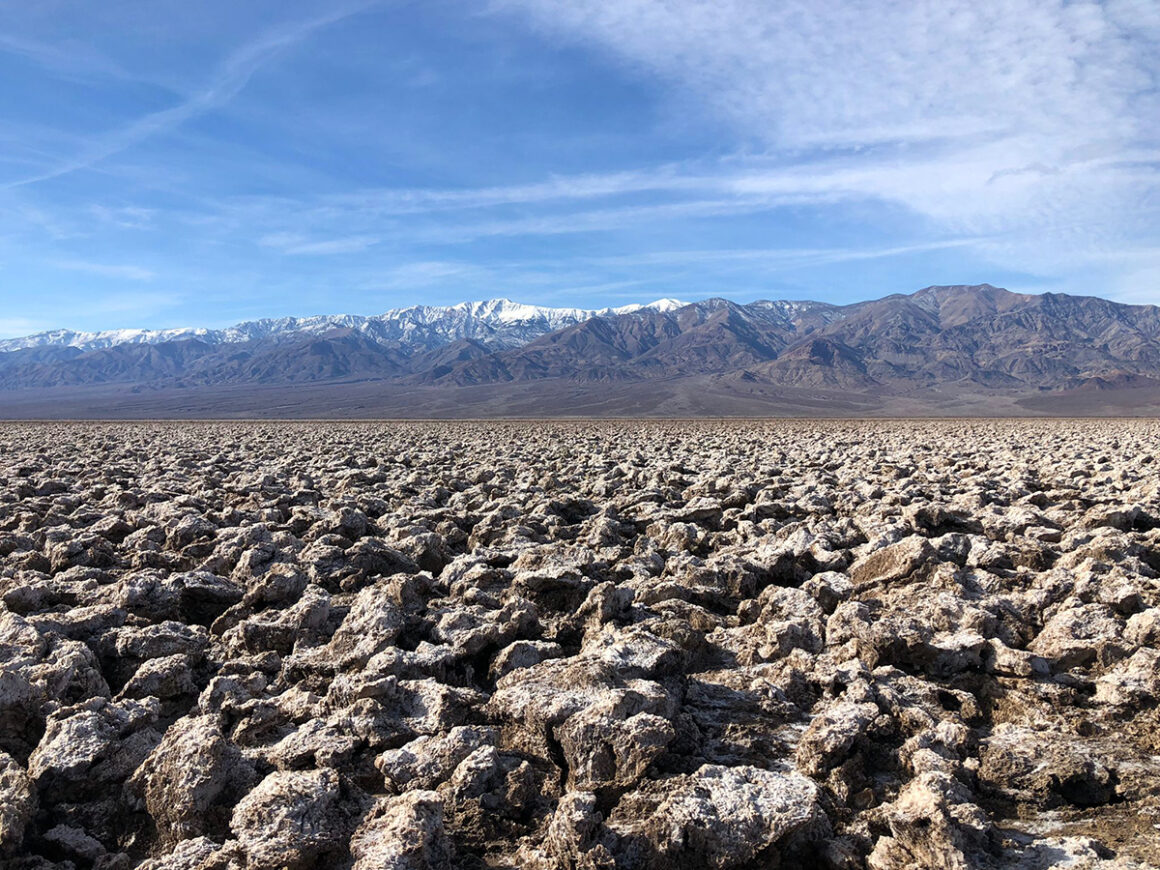
While you won’t be teeing off here, Devil’s Golf Course is a must-see in Death Valley National Park. This vast expanse is covered with jagged rock salt that has been eroded by wind and rain, forming sharp, rugged mounds. So rugged, in fact, that it’s said “only the devil could play golf on such rough links.”
The salt crystals also expand and burst in the heat, creating an eerie popping sound you can hear as you walk around the edges of the formations.
How to Get There
- Road / Highway: Badwater Road
- Vehicle Restrictions: Suitable for most vehicles, including passenger cars
- Parking: Gravel lot near the formations
- Best Time to Visit: Early morning or late afternoon to avoid the heat
- Tips / Notes:
- Wear sturdy shoes if you plan to explore near the salt
- Bring water and sun protection
- Don’t attempt to drive onto the formations – they’re fragile and dangerous
9. Check Out Harmony Borax Works
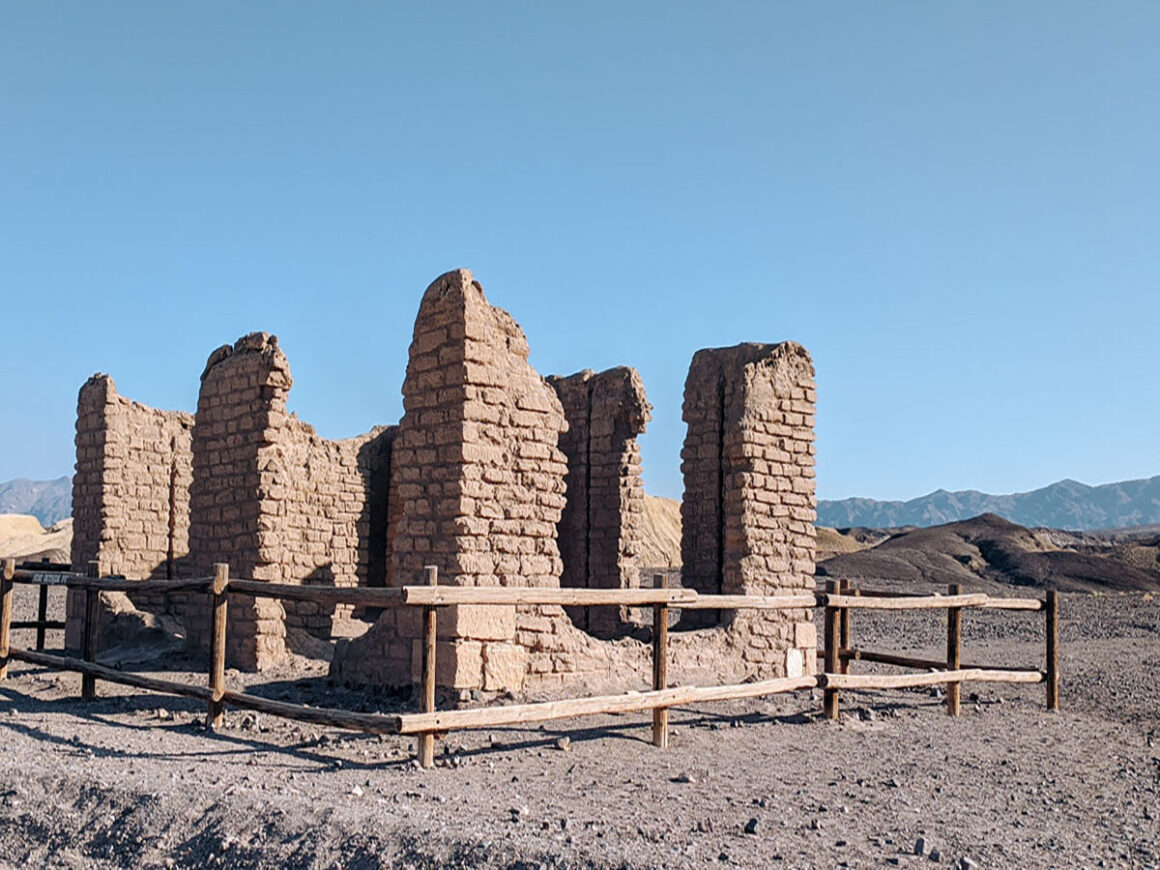
Harmony Borax Works, built in 1881, played a key role in the development of the Furnace Creek area after borax was discovered. At its peak, more than forty men worked here processing the ore to extract borax. The company famously used the 20 Mule Team wagons to transport the mineral out of the valley.
The plant was short-lived, closing in 1888, but remnants of the original buildings and mining equipment remain, offering a fascinating glimpse into Death Valley’s mining history.
How to Get There
- Road / Highway: Mustard Canyon Drive off CA-190
- Vehicle Restrictions: Gravel road suitable for most vehicles
- Parking: Small gravel lot onsite
- Best Time to Visit: Morning or late afternoon to avoid the heat
- Tips / Notes:
- Bring water and sun protection
- Take time to explore the remnants of the old buildings and mining equipment
10. Play on Mesquite Flat Sand Dunes
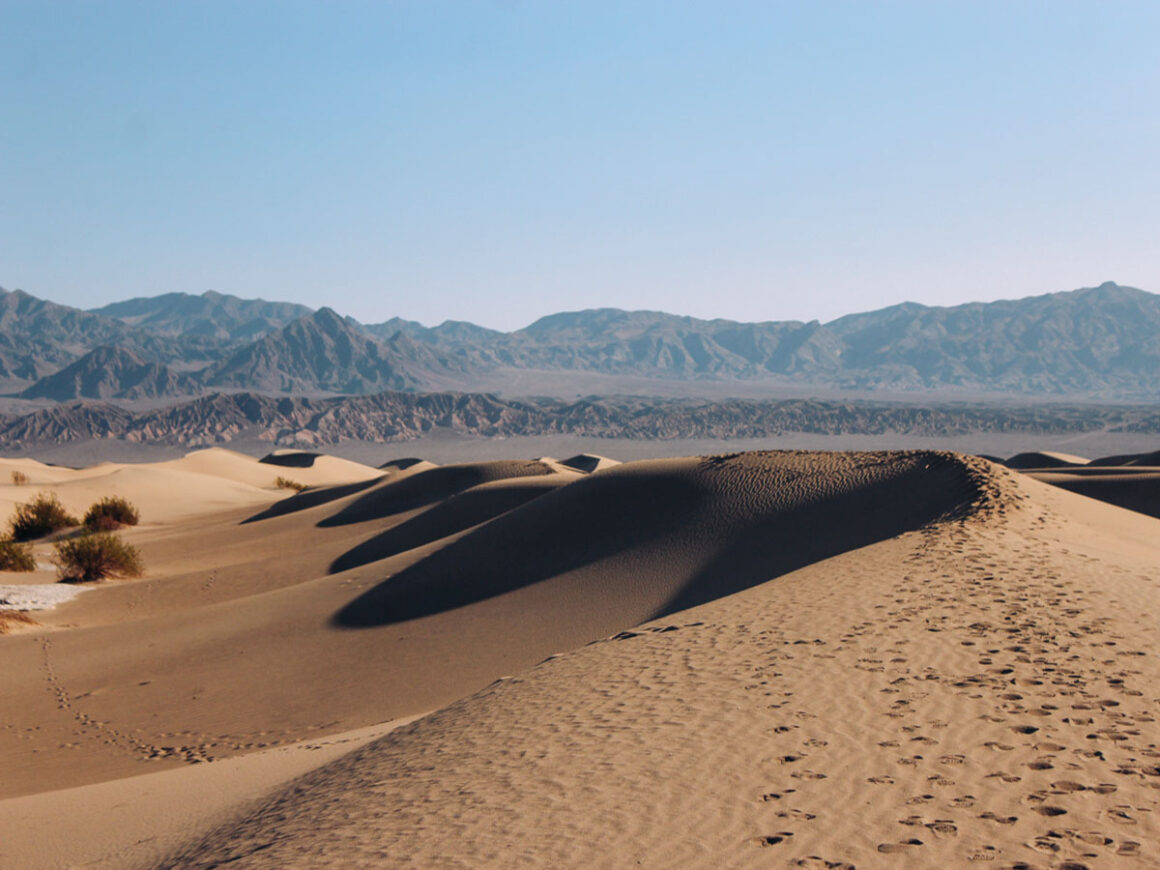
One of the most fun things to do in Death Valley National Park is exploring the sand dunes and Mesquite Flat Sand Dunes is the most accessible dunes for passenger cars.
These dunes were shaped over centuries by constant wind and erosion. You’ll find crescent, linear and star-shaped dunes, with the highest point accessible via a roughly 2-mile out-and-back hike. While you can hike to the top, it’s not necessary to enjoy the magical views of the dunes.
Star Wars fans may recognize this area as the dunes of Tatooine. No droids here but early morning visits offer cooler temperatures and a chance to see wildlife like sidewinder rattlesnakes, though encounters are rare.
How to Get There
- Road / Highway: CA-190
- Vehicle Restrictions: Accessible by passenger car
- Parking: Large parking lot onsite
- Best Time to Visit: Early morning for cooler temperatures and softer sand
- Tips / Notes:
- Bring water, sun protection, and sturdy shoes for walking on the sand
- Sunrise provides the best light for photograph
11. Wander Around Ubehebe Crater
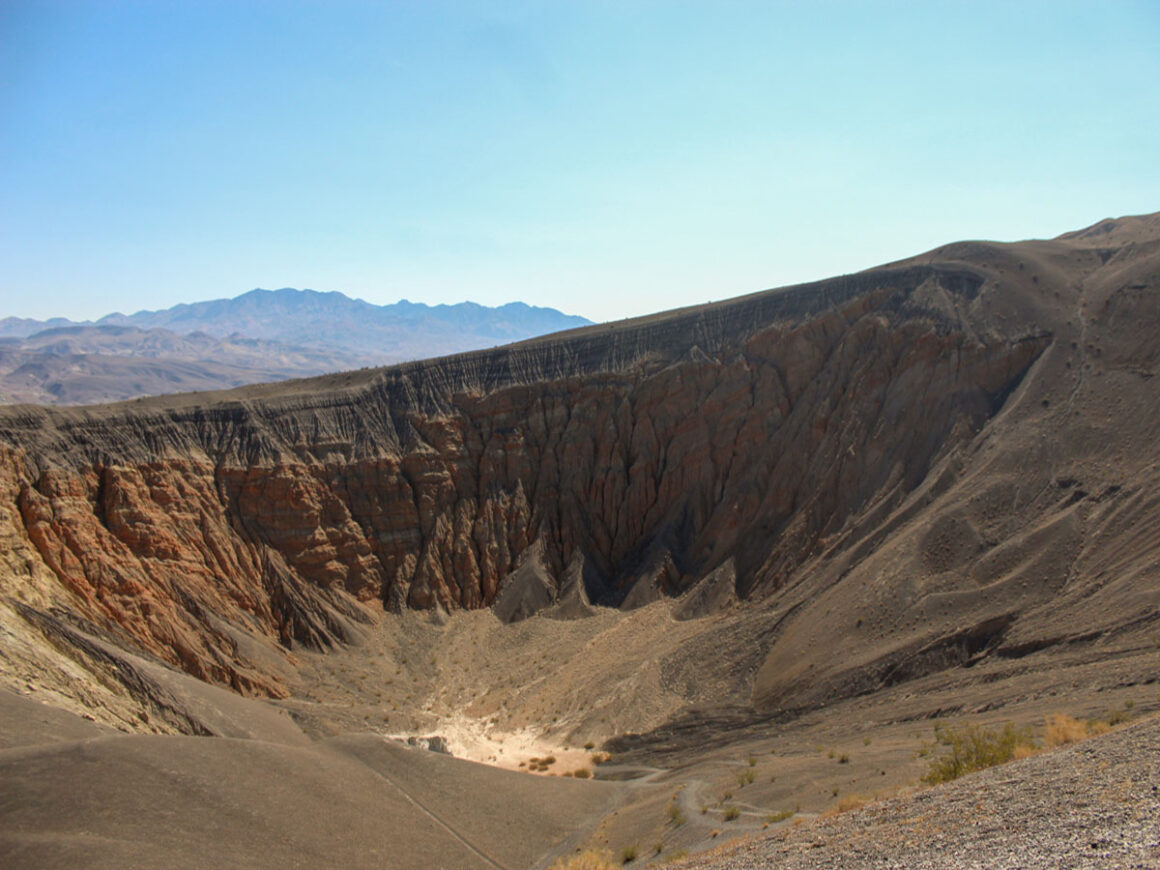
If I had to pick a favorite thing to do in Death Valley National Park, Ubehebe Crater would be in the top three. The massive crater is stunning. It was formed when hot magma rose to the surface and met underground water, causing a violent steam explosion.
The main crater is about 600 feet deep and half a mile wide. That’s huge – and it’s difficult to capture the entire crater without a wide-angle lens. Visitors are allowed to hike down into the crater if they’re feeling adventurous, but climbing back up is a challenge.
The walk from the parking lot to the crater rim is a short uphill stroll on a paved path. The rim trail is about 2.2 miles and features loose volcanic rocks, so closed-toe shoes are essential. Within walking distance, you can also explore smaller craters, including Little Hebe Crater.
How to Get There
- Road / Highway: Scotty’s Castle Road (paved, but can close during or after rain)
- Vehicle Restrictions: Standard passenger vehicles
- Parking: Lot at the crater
- Best Time to Visit: Early morning or late afternoon to avoid heat and capture better light
12. Drive Wildrose Canyon
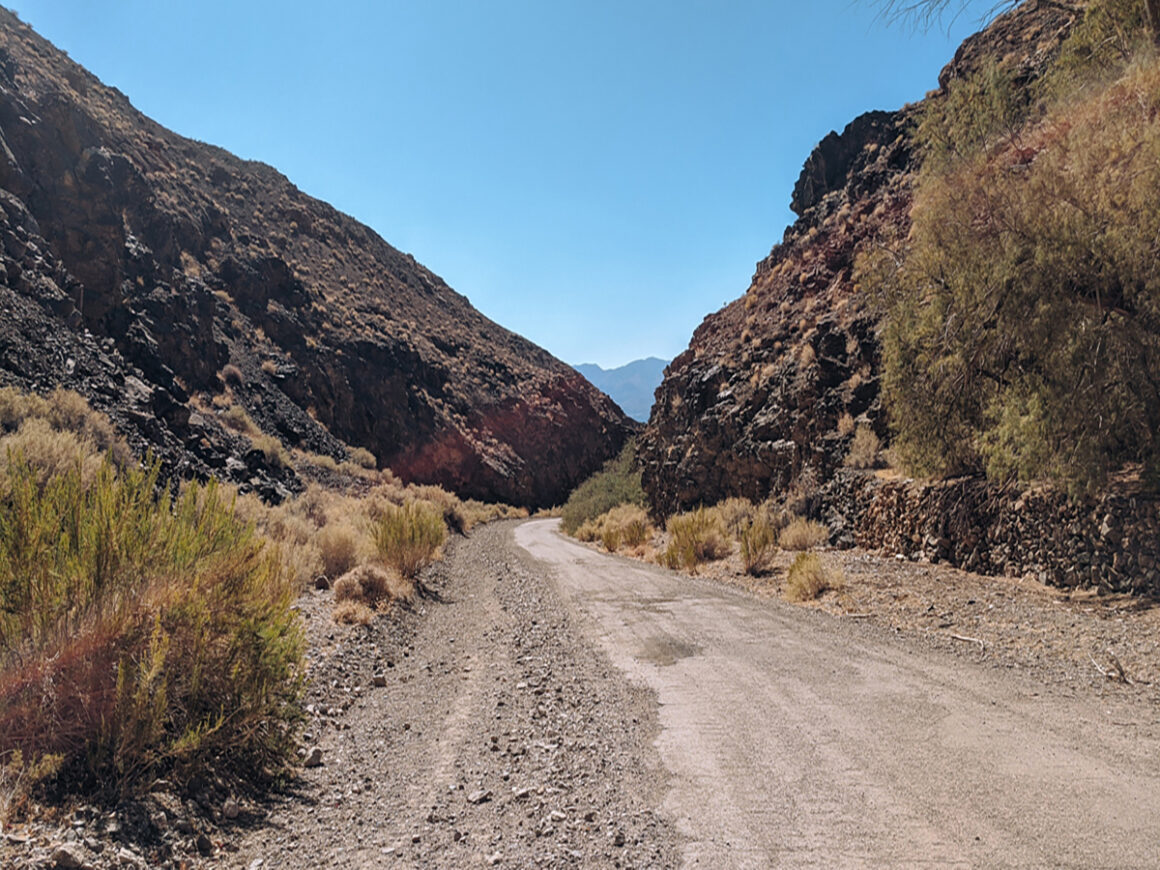
For a scenic loop drive, we explored the route from Stovepipe Wells to Panamint Springs and back, taking Wildrose Canyon Road along the way. The road winds up the mountains to 5,300-foot elevation, offering cooler temperatures and sweeping desert views.
Eventually, it connects with Emigrant Canyon Road, which leads back to Highway 190 near Emigrant Campground. The full loop is approximately 31 miles. The road is mostly paved and passable for standard vehicles but some sections are bumpy and narrow, with exposed gravel.
Certain areas are especially prone to flooding, so conditions can change quickly. This is one of the reasons it’s best to avoid driving here during or immediately after rain.
How to Get There
- Road / Highway: Turn off Highway 190 near Panamint Springs onto Panamint Valley/Trona Wildrose Road, then left onto Wildrose Road
- Vehicle Restrictions: No RVs, buses or trailers over 25 feet
- Parking: Pullouts along the route for photos and short stops
- Best Time to Visit: Early morning or late afternoon for cooler temperatures and better lighting
- Tips / Notes:
- The road can flood easily—avoid during/after rain
- Drive carefully on gravel and rough patches
- Bring water and snacks for the drive
- Check my Google Map for exact driving directions
13. Have a Picnic at Wildrose Station
High on the pass in Wildrose Canyon, Wildrose Station marks the site of a former privately owned stagecoach stop. With a spring nearby, it was a convenient place to water horses, grab a bite to eat and even spend the night.
After Death Valley was designated a national monument in 1933, the station was allowed to continue to operate under lease for a time until the Park Service chose not to renew the lease and eventually removed the buildings.
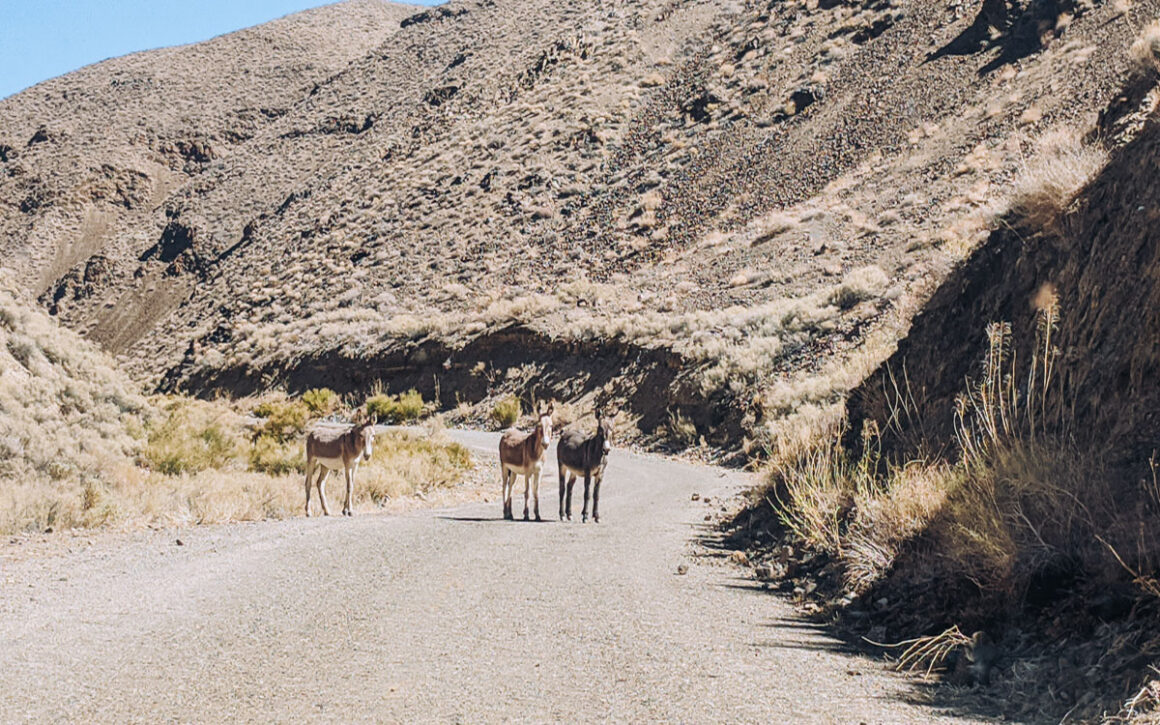
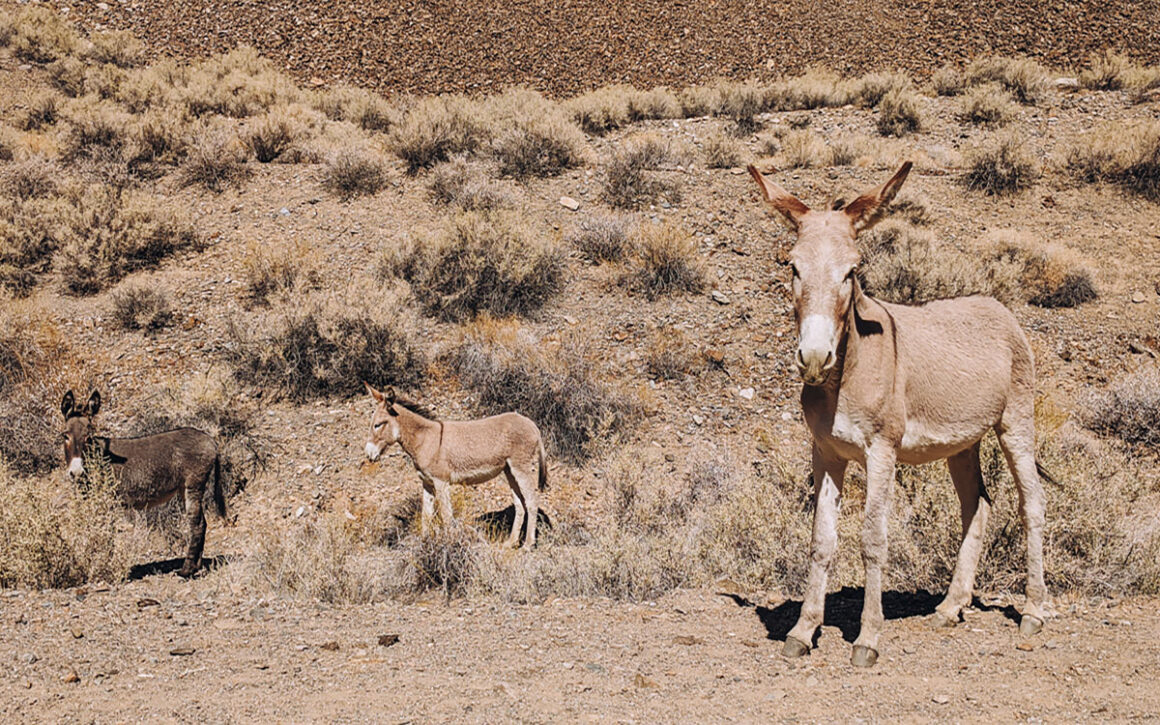
Today, a few remaining palm trees mark the site on either side of the road and the Park Service has added a few picnic tables. It’s a perfect spot for a picnic lunch and you might spot – or at least hear – the park’s wild donkeys. Many are descendants of donkeys left from the mining days and they seem to love this cooler, spring-fed area.
How to Get There
- Road / Highway: Wildrose Canyon Road; watch for the palm trees marking the site
- Parking: Pull off to the side of the widened road near the picnic tables
- Best Time to Visit: Mid-morning or late afternoon to enjoy cooler temperatures
- Tips / Notes:
- Burros are wild—don’t feed them
- Follow Leave No Trace principles and pack out all trash
- Bring water and snacks for a relaxed stop
14. Wildrose Charcoal Kilns
Another remnant of Death Valley’s mining history can be found in the Wildrose area: the Wildrose Charcoal Kilns. Built in the late 1800s by a mining company, the kilns were used to produce charcoal as fuel for smelters, which extracted metal from ore. Ten kilns remain standing today, making them some of the best-preserved examples in the western United States.
How to Get There
- Road / Highway: Emigrant Canyon Road
- Vehicle Restrictions: Last 2.1 miles are unpaved but passable for most passenger vehicles
- Distance: 28 miles from Highway 190
- Parking: Small lot near the kilns
- Best Time to Visit: Morning or late afternoon for cooler temperatures
- Tips / Notes:
- Bring water, sunscreen, and a hat
- Explore the area carefully; uneven ground near the kilns
Don’t forget a Death Valley National Park guidebook! For years Moon Travel Guides have been my go-to source for all things travel. Their park guides are so helpful and written by authors who spend a lot of time in the parks they write about. I’ve linked to Moon Death Valley National Park guide here.
15. Stop By Father Crowley Vista Point
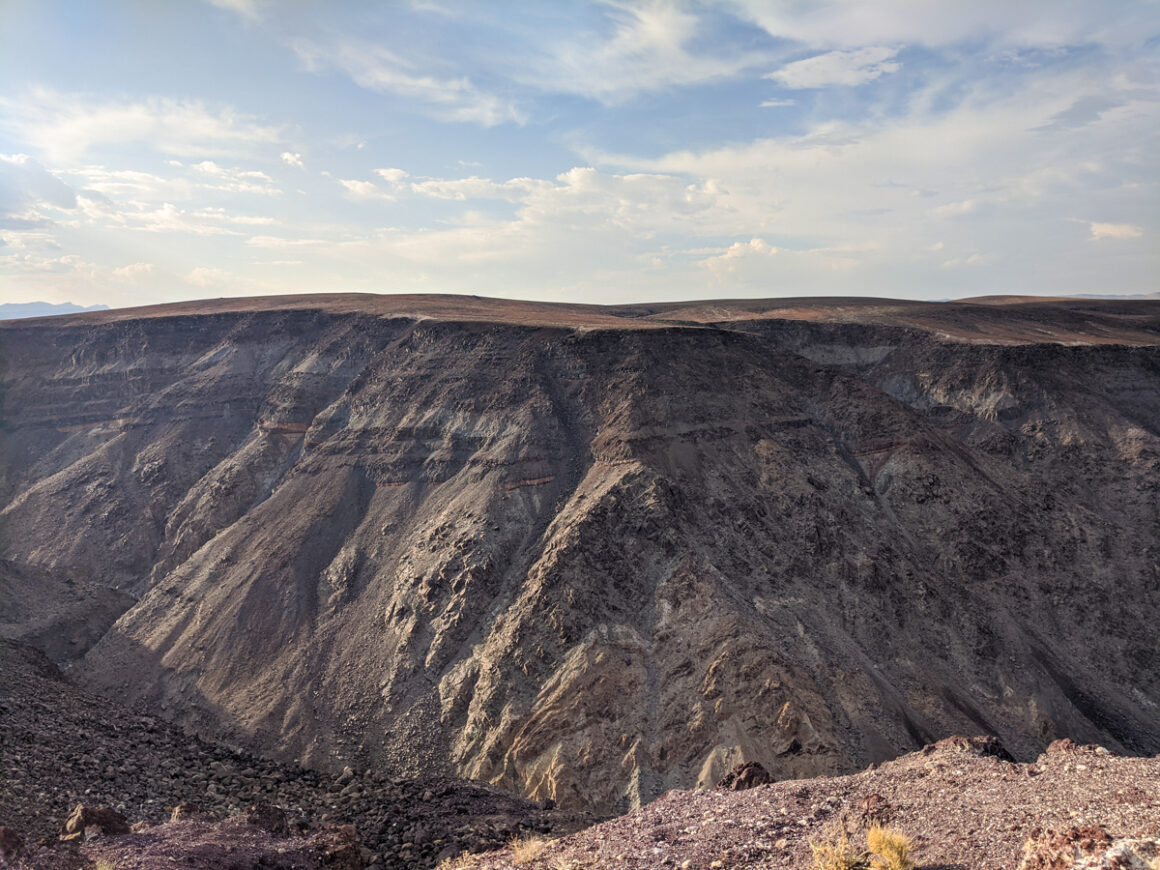
Death Valley National Park is full of jaw-dropping views but by far one of the best in the entire park is Father Crowley Vista Point. Named after the Catholic priest, who ministered to the people of Inyo County (California), his parish included the lowest point in the country, Death Valley and the highest, Mt. Whitney.
The main feature at this viewpoint is Rainbow Canyon, a colorfully striped canyon formed by volcanic activity. In recent years, it was sometimes called Star Wars Canyon because the military used it for fighter jet training until a crash in 2019 ended those flights.
How to get there:
- Road / Highway: CA-190
- Vehicle Restrictions: None
- Best Time to Visit: Morning or late afternoon for best lighting
- Parking: Ample parking at the overlook
- Tips:
- Wheelchair accessible
- Restrooms available
- Don’t miss the Father Crowley mural in nearby Lone Pine
16. Stargaze
Far away from the light pollution of major cities, Death Valley National Park has some of the darkest skies in the United States and has been designated as a Gold Tier International Dark Sky Park. This award is reserved for areas with exceptionally dark night skies.
On nights when the moon isn’t full, you can see millions of stars and even the Milky Way with the naked eye. During the winter season, the park hosts special Dark Sky events and ranger-led stargazing activities. Check the park website or visit the Furnace Creek Visitor Center for details.
Tips:
- Plan your visit around the moon cycle for optimal stargazing
- Winter season offers special Dark Sky events
- Visit the Furnace Creek Visitor Center for current programs

17. Explore Mosaic Canyon
Mosaic Canyon is one of the most exciting short hikes in Death Valley National Park. The canyon gets its name from the smooth, polished marble walls that appear to be tiled with natural mosaic patterns created by flash floods over thousands of years. In some sections, the canyon is really narrow, with curved walls that have been smoothed by rushing water.
The hike begins in a wide wash before tightening into slot-like sections, where you’ll encounter dry waterfalls, marble chutes and textured rock walls that reflect light in subtle shades of white, gray and tan. While the canyon isn’t long, it packs in a lot of interest and is especially fun for visitors who don’t mind a bit of scrambling.
How to get there:
- Road / Highway: Mosaic Canyon Road, off Stovepipe Wells Road
- Vehicle Restrictions: None in dry conditions (passenger cars are usually fine)
- Best Time to Visit: Morning or late afternoon, especially in warmer months
- Parking: Small dirt parking area at the trailhead
- Tips:
- Wear closed-toe shoes with good traction
- Avoid visiting during or after rain due to flash flood risk
- Bring water, even for a short hike
- No restrooms
When’s the Best Time to Visit Death Valley?
Spring: Early spring is a terrific time of year to visit Death Valley National Park. The winter crowds have dispersed and temperatures are milder. Late spring, especially after a wet winter, is wildflower season so it can be a bit busier then.
Summer: Average temperatures in summer at Death Valley range anywhere from 110F to 116F, or higher. It’s obvious why it’s not the ideal time for exploring the park, let alone hiking. Not to mention tent camping would be downright miserable in summer.
Fall: Fall is a popular time for visiting Death Valley National Park. Although, in early Fall, temperatures can still be fairly hot. When we visited in October one year, the high temperature was 116F. Unfortunately, we were tent camping and honestly, sleep didn’t come so easy.
Winter: Winter is the busiest time in Death Valley National Park. Temperatures are mild and can range anywhere between 70’s during the day to mid 30’s for the lows. It’s way easier to visit during the winter months since you don’t have to be worried about overheating. The flip side is there will be more people in the park in the winter.
Where to Stay in Death Valley National Park
Whether you prefer camping under the stars or the comforts of a hotel, Death Valley has a variety of places to stay. Inside the park there are nine campgrounds and three hotels plus others in the surrounding areas outside the park.
Besides developed campgrounds, there are several primitive campgrounds in the park for those who enjoy less structured camping. Check nps.gov for a current listing of those campgrounds and how to get there. You can also download a backcountry and wilderness map.
Developed campgrounds in the park include:
- Furnace Creek Campground
- Sunset Campground
- Texas Springs Campground
- Stovepipe Wells Campground
- Emigrant Campground
- Wildrose Campground
- Mesquite Spring Campground
Private campgrounds in the park:
- Panamint Springs Campground
- The Ranch at Death Valley
- Ohyu RV Park
Hotels in the Death Valley National Park
For those looking for more luxury – the park’s hotels provide a comfortable overnight after a day of exploring, with options ranging from historic inns to modern lodges. All of the hotels are open all year (weather permitting).
- Panamint Springs Resort
- The Inn at Death Valley
- The Ranch at Death Valley
- Stovepipe Wells Village
Death Valley National Park FAQ
How much time do you need in death valley national park?
You could see everything on this list in two days but I’d recommend at least three day and add in a fourth day if you have time for some of the backcountry and remote areas or if you want to spend more time hiking. to 4 days. If you visit when it’s hot, it’s easy to get tired very quickly.
Why is it Called Death Valley?
The name Death Valley was coined when a group of pioneers almost died in the area in the winter of 1849-1850. When they were finally rescued, one of them turned around, looked back and said “goodbye, death valley” and the name stuck.
What’s the closest city to Death Valley?
Beatty, Nevada, aka, the Gateway to Death Valley is less than 10 miles from the east entrance of the park. If you enter or exit the park at Beatty, be sure to visit Rhyolite, a ghost town located between Beatty and the park.
Tips for Visiting Death Valley National Park
- Park Hours: Death Valley is open 24/7, 365 days a year.
- Entrance Fees: The park charges a $30 per car entrance fee. Consider purchasing an America the Beautiful National Park Pass to save on Death Valley and 2,000+ other public lands across the U.S.
- Maps & Navigation: Pick up a park service map at entrance kiosks or the visitor center – or download one here.
- Cell Service: Service is limited throughout the park. Furnace Creek is one of the better spots, but don’t rely on your phone for navigation.
- Park App: The National Park Service now has a helpful app for self-guided tours and park info. Access it here.
- Vehicle Prep: Make sure your vehicle is in top condition. Check fluids, tires, and ensure your spare is ready, along with tools for a flat.
- Fuel: Gas is available at Furnace Creek, Stovepipe Wells, and Panamint Springs – but distances between stations are long, and prices are higher than outside the park. Fill up before entering and top off whenever possible.
- Hydration: Bring plenty of water – at least one gallon per person, per day.
Google Map of Things to do in Death Valley
This Google Map has layers and includes these things to do in Death Valley as well as driving instructions from Las Vegas and a suggested itinerary. Access the layers by clicking the tab in the left top. You can remove a layer you don’t want to see by simply unchecking that layer.
You can also add the map to your own Google account by clicking the star at the end of the title. Click on the features for info like addresses and phone numbers.
Final Thoughts on Things to do in Death Valley
Hands down, Death Valley National Park is one of my personal favorite parks in the United States. Even though it’s a bit more difficult to visit because of its conditions, it’s the most most magical experiences of all the national parks. It’s definitely worth the extra effort and preparation.
The good thing about Death Valley is since it’s so close to Los Angeles and Las Vegas, it’s easy to visit on its own, as a day trip, or as part of a longer southwestern Mojave Desert itinerary that includes Joshua Tree National Park and Mojave National Preserve. Whenever you decide to visit, I know you’ll love it just as much as me.
See you on the road!

Author: Lori Blalock
A girl raised in the South, Lori is the founder of Southerner Says and is a travel advisor who’s road tripped all 50 states and visited over half of the Mexican states. Passionate about national parks, public land, sunsets and good barbecue, she writes about and helps others plan memorable adventures in the U.S., Mexico and Caribbean. Georgia is home — but she’s rarely there.