
What Should I Check on My Car Before a Road Trip?
A breakdown can ruin a road trip before it starts. Here’s what I check on my car before every long drive, from tires and fluids to brakes and battery.
I think road trips are the best way to see the United States. They’re also the best way to find out your car might not be in its best condition. Before I worked in travel, I was an automotive shop owner. I know first-hand how stressful and costly car problems on the road can be. Trust me when I say: do everything you can to avoid that scenario.
Part of doing everything right is performing a pre-road trip vehicle inspection to catch any small issues before they become big, expensive repairs on the road. A good auto tech can do an inspection but you can do it too. What should I check on my car before a road trip? If that’s the question you’re asking, this article is for you.
What to Check on Your Car Before a Road Trip
This list covers the most important things you should check on your vehicle before you even leave your driveway.
1. Tires
Without your tires your vehicle isn’t going anywhere. They are literally the thing between your car and the road and they deserve checking out before any short or long road trip.
First, check the pressure in all four tires — including the spare. Underinflated tires handle poorly and reduce traction. That floaty, loose feeling when you go through a curve? That’s low tire pressure talking. On the other hand, overinflated tires can wear unevenly and are more prone to blowouts.
The correct pressure for your vehicle can be found in your owner’s manual and on the sticker inside the driver’s door — not on the tire itself. Check the pressure when it’s cold, before you drive anywhere.
While checking the pressure also look at the tire tread. If it’s worn or uneven then a visit to the tire shop might be your next stop. And if you’re due for a rotation, do it before the road trip so a technician can do all of this at the same time.
2. Spare Tires & Tools
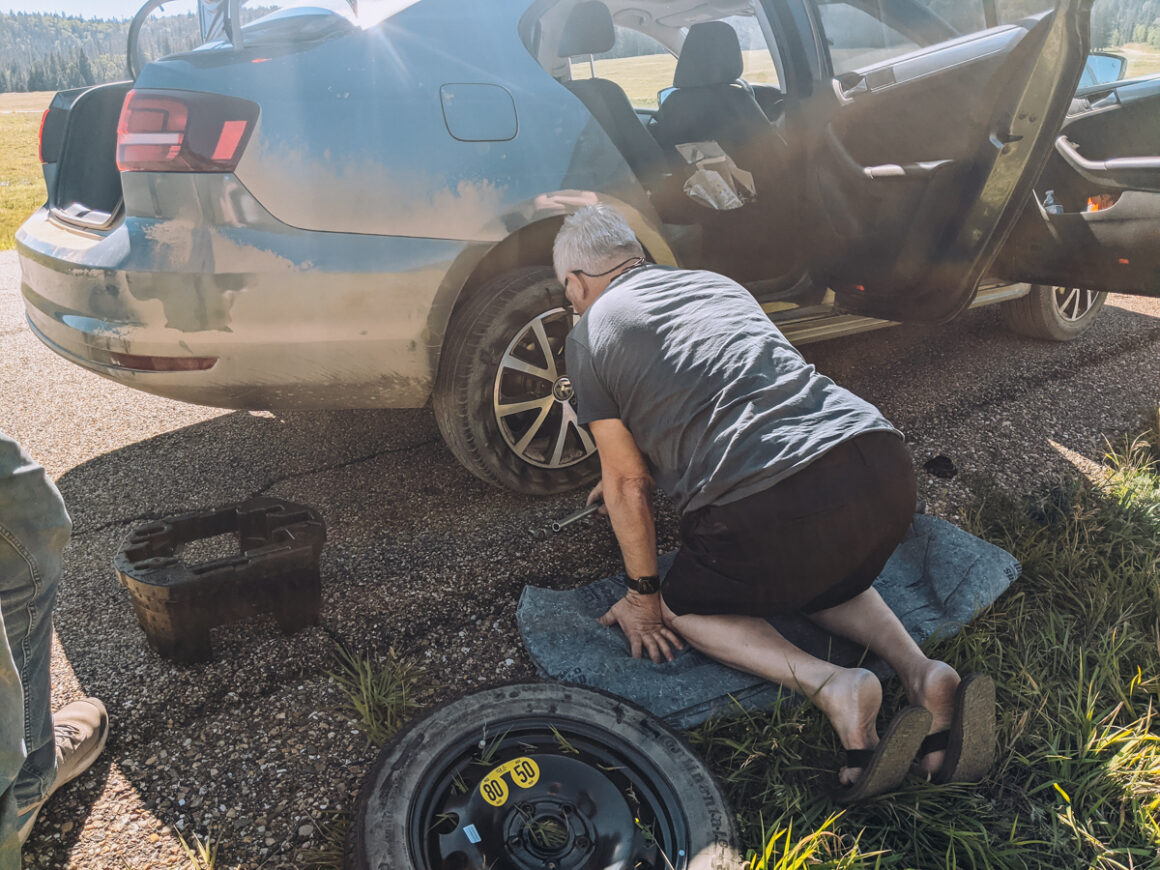
A flat spare tire is useless but it’s one of the things people forget to check until they actually need it. Before you leave on your road trip — and even periodically for day to day driving — physically check that your spare is in good working condition and properly inflated.
Then, find your jack and lug wrench and make sure you have every tool you need to actually change a tire. Some vehicles — Volkswagens in particular — require a specific tool to remove the lug nuts that isn’t always stored with the other equipment. Find out before you get a flat, not after.
If your spare tire is a donut — a compact or temporary spare tire — know its limitations. Follow the manufacturer’s recommendations and avoid driving over the suggested distance and speed limits. Most donuts are rated for no more than 50 mph and 50 to 70 miles. They’re meant to get you to a tire shop, not to finish the road trip.
3. Fluid Levels
Proper fluid levels are vital to your vehicle’s performance. Engine oil, coolant, brake fluid, power steering fluid and windshield washer fluid — while not as important — need to be checked. In fact, low fluids are one of the most common and most preventable causes of roadside breakdowns.
Engine oil is the biggest one. It lubricates everything that moves inside your engine and without enough of it, you’re looking at serious damage fast. Pull the dipstick, wipe it clean, reinsert it and check the level. If it’s low, top it off before you leave. If it’s dark and gritty, it’s overdue for a change.
Coolant keeps your engine from overheating — critical on any long trip and especially important if you’re headed somewhere hot like Death Valley or any desert destination. Check the reservoir when the engine is cold.
Brake fluid and power steering fluid are less likely to be low but worth a quick check. Windshield washer fluid seems minor until you’re two hours into a bug-splattered highway stretch with no visibility and an empty reservoir.
4. Leaks
Fluid levels tell you what’s in the car. A leak tells you where it’s going. The easiest way to check is to look at the ground where you normally park. If you don’t have a good spot, slide a piece of cardboard under the engine overnight and see what’s on it in the morning.
The color gives you a clue:
- Dark brown or black: engine oil
- Green, orange, pink or blue with a sweet smell: coolant
- Red or reddish-brown: transmission fluid or power steering fluid
- Clear to light yellow or brown and slick: brake fluid
- Clear and watery: usually just condensation from the AC, which is normal
Colors can overlap, so don’t try to diagnose it from the stain alone. A small drip isn’t always an emergency, but a puddle that keeps growing is. If you smell gas or think the fluid is brake fluid, don’t drive the car. Have it towed to a shop.
5. Battery
A battery that’s failing rarely lets you know until the car won’t start. Before your trip is the right time to have it tested, and most auto parts stores will do it for free.
You can also inspect it yourself by looking at the terminals. Corrosion, that white or bluish buildup around the posts, can affect the connection and cause starting problems even when the battery is fine. If you see it, clean it before you go.
If your battery is more than three to four years old, has been slow to start the car or has needed a jump recently, replace it before the trip. A new battery is considerably cheaper than a tow in an unfamiliar town.
6. Brakes
Brakes are one of the most vital components on a car. Not only do they prevent collisions but they allow you to control the vehicle. If your brakes are squeaking, grinding or the pedal feels soft or low, that’s something you need to take care of. Don’t put it off especially if your route involves mountain roads and steep grades like you find in many national parks.
To test your brakes — listen for noise when you brake normally and pay attention to how the pedal feels. It should be firm and responsive. Anything different like pulsing, pulling to one side or unusual sounds should be checked as soon as possible.
You might also find these road trip guides useful:
How to Plan a Road Trip: a Step by Step Guide
Mistakes You Don’t Want to Make on a Road Trip
How to Road Trip Responsibly in 2026
7. Lights
Like other things on your vehicle, lights require regular maintenance to ensure they are working correctly. Before your road trip, take a moment to inspect all the lights — walk around the car and check the headlights, taillights, running lights, brake lights, turn signals and reverse lights. It only takes minutes and could save you a ticket.
Brake lights are the hardest to check alone. If you don’t have someone to stand behind the car while you press the pedal then back up toward a wall and watch the reflection.
8. Wiper Blades
Wiper blades are one of those easy to ignore things until it’s pouring rain at night on an unfamiliar highway and they’re screeching across your windshield. This exact situation is why you should check them before you leave. If they’re leaving streaks, skipping or making noise, then you need to replace them.
This is one of the most inexpensive repairs you can make and most auto parts stores like Pep Boys, Advance Auto Parts and O’Reilly’s can recommend good blades. In some cases, they’ll even swap them out for you. However, knowing how to do it yourself is not a bad idea at all.
9. Belts & Hoses
If you’re comfortable checking the tires then popping the hood and taking a look at the belts and hoses should be no problem. A worn belt or a leaking hose will leave you stranded at the worst possible time.
With the engine off and cool, look at the belts for cracking, fraying or a shiny, glazed surface. A squealing sound when you start the car is another sign a belt is wearing out.
For the hoses, focus on the large ones running to and from the radiator. Squeeze them. They should feel firm but flexible. If a hose feels rock hard, mushy or has bulges, cracks or a crusty residue around the connections, it’s due for replacement. Also look under the car for any coolant puddles, which are usually bright green, orange or pink.
If you’re not sure what you’re looking at, have a shop do a quick inspection. If you’re due for an oil change anyway, bundle the two. A good technician should do a free inspection and look at everything under the hood while they’re in there
10. Air Conditioning & Heat
Your car’s AC and heating aren’t the most important components for car functionality but they are necessary for a comfortable and enjoyable journey. Test both before you leave. If the AC isn’t blowing cold or the heat isn’t working, you want to know that before you’re three states away in July.
Any noises or issues when you turn the fan on, or problems with cooling, should be addressed before you begin your travels. Most of the time an AC or heating failure won’t leave you stranded but it can make for an extremely miserable ride.
In all my miles, I’ve fortunately avoided serious car problems — but there were two separate times, without advance warning, that my AC went out in of all places Florida. Of course, I came on home to Georgia but talk about a hot drive home.
11. Key Fob Battery
Easy to overlook and so inconvenient when it dies. If your fob has been requiring multiple clicks to work or your car is showing a “key not detected” warning even when it’s right there, the battery is going. Replace it before you leave.
It’s super simple to do — the batteries are inexpensive, available at any Walmart, Target or auto parts store and take about two minutes to swap out. They come in packs so keep at home or in your glovebox for when there isn’t a store around.
12. Emergency Kit
Every car should have an emergency kit even when you aren’t road tripping. It doesn’t have to be complicated or exhaustive — just enough to keep you comfortable and safe while you wait for whatever kind of help or assistance you might need.
Your kit should include a basic first aid kit, a flashlight, roadside flares or reflective triangles for safety. Then things like phone chargers, water, a few non-perishable snacks, maybe even a blanket and any medications you take regularly are vital as well for comfortable waiting.
A compact jump box for starting a car also does double duty as an auxiliary battery to keep devices charged. After testing several, I’ve found this one that also inflates tires to be very useful. If you don’t want to invest that kind of money at least keep jumper cables, a tire gauge and a can of Fix-a-Flat in your vehicle.
13. Important Paperwork
It’s always a good idea to have current registration and proof of insurance in the vehicle. Most states accept digital insurance cards but if you’re heading somewhere with spotty cell service, a paper copy is your backup. I had an uncomfortable ten minutes with a Texas Highway Patrol officer once because I couldn’t locate mine. That was enough to make me check every time now.
What Should You Do When a Warning Light Comes On?
Besides having an actual vehicle issue that needs a repair, there’s not much scarier than the sudden appearance of a dashboard warning light coming on. And it’s usually at the most inconvenient time. What should you do? Some warning lights can be ignored for a bit and others need immediate attention. Here’s a breakdown of common warning lights.
Common Car Warning Lights
Know what you’re looking at before you hit the road
Oil Pressure
Pull over safely and turn off engine immediately. Do not drive.
Battery / Charging
Electrical system failing. Limit accessories and get to a shop.
Engine Temperature
Overheating. Pull over, turn off AC, don’t open hood until cool.
Brake System
Check parking brake first. If disengaged and light stays on, stop driving.
Seat Belt Reminder
Someone’s unbuckled. Check all passengers before clearing.
Check Engine
Many causes — from gas cap to sensor. Get it scanned soon. Flashing = urgent.
Tire Pressure (TPMS)
One or more tires low. Check all four and spare when safely stopped.
Low Fuel
Fill up soon — especially in remote areas. Don’t push your luck on a road trip.
Traction Control
Wheels slipping. Normal in rain or snow — flashing means it’s working.
Service Due
Oil change or scheduled service coming up. Plan before your trip.
High Beams On
Your brights are active. Remember to dim for oncoming traffic.
Turn Signal
Flashing fast? A bulb may be out. Check all four corners before you go.
⚠️ Warning light designs vary by make, model, and year. Your dashboard light may look different than shown here. When in doubt, check your owner’s manual.
southernersays.com
Check Engine Light
The check engine light covers a wide range of issues — from something as minor as a loose gas cap to something that needs immediate attention. Here’s my honest answer: you cannot tell by looking at the light alone how serious it is.
What you can do is pay attention to how the car is driving. If everything feels normal — no strange noises, no loss of power, no overheating — you’re likely okay to drive to a shop and get it scanned with a diagnostic scan tool. Most auto parts stores will hook it up and read the code for free.
If the check engine light is flashing rather than steady, that’s a different situation. A flashing check engine light typically indicates a misfire that could damage other vehicle components. Pull over when it’s safe to do so and don’t drive it until it’s been checked.
If you have any doubts, it’s best to get it checked with a diagnostic tool before continuing the trip.
Oil Pressure Warning Light
This warning light is not a “keep driving and figure it out later” situation. If your oil pressure light comes on — the one that looks like a vintage oil can — pull over as soon as it’s safely possible and turn the engine off.
Low oil pressure means your engine is not properly lubricated. Driving with it like that, even for a short distance, can cause serious and expensive damage. Check your oil level. If it’s low, add oil and see if the light goes off. If the light stays on after adding oil, or if you don’t have oil to add, call for help. Do not keep driving.
This light is very different from the oil change reminder light, which is just letting you know maintenance is due and doesn’t require immediate action.
Temperature Warning Light
If your temperature gauge is in the red or the temperature warning light comes on, pull over and let the engine cool down. Do not attempt to open the radiator cap when the engine is hot and only add coolant when it has cooled completely.
If it overheats again after adding coolant, have it towed to a repair facility. A blown head gasket is significantly more expensive than a tow.
Know Who to Call Before You Break Down
Even a thorough inspection won’t catch everything. Before you leave, consider purchasing roadside assistance. Companies like AAA and Good Sam are excellent. And some drivers have assistance through their auto insurance, a credit card, the car manufacturer or even a cell plan.
Check who covers you and what number to call, then save it in your phone and keep the card in your glovebox. Cell service can be spotty on remote stretches. Also confirm what’s included, because towing distance varies a lot by plan and not every one covers fuel delivery or lockouts.
Car Check Before Road Trip FAQ
How Far in Advance Should You Check Your Car Before a Road Trip?
At least a week before you leave — ideally two. That gives you time to get any repairs done without rushing or delaying your departure.
Can I Check My Car Myself Or Do I Need a Mechanic?
Most of them you can do yourself — fluids, lights, wipers, tire pressure and a visual inspection of belts and hoses are all accessible without tools or training. Brakes, battery testing and anything mechanical are better left to a shop.
What’s the Most Important Thing to Check On my Car?
Tires and fluids. Between those two categories, you’ll catch the majority of what causes roadside breakdowns.
Should I Get an Oil Change Before a Road Trip?
If you’re within a few thousand miles of being due, yes. Do it before you leave. It’s also a natural opportunity to have a shop look everything over at the same time.
What Should I Do If My Car Breaks Down in a Remote Area?
Stay with your vehicle. It’s easier to spot than a person on foot, provides shade and shelter and is where help will look for you. Put on your hazard lights, set out reflective triangles if you have them and call for help when you have service.
Road Trip Preparation
Now that you’ve read through the list there’s no more guessing about what to check on your car before a road trip. A little preparation goes a long way toward making sure the only stories you bring home are the good kind — and none of them involve riding in a tow truck.
If you’re planning a road trip and feel overwhelmed or just want some help putting it all together, I’d love to help. I’ve road tripped all 50 states and driven hundreds of thousands of miles. Email me for planning options and I’ll be in touch.
See you on the road!

Author: Lori Blalock
A girl raised in the south, Lori is the founder of Southerner Says and is a travel advisor who’s road tripped all 50 states, visited half the states in Mexico and has been to more than a handful of Caribbean islands and Central American countries. Passionate about small towns, national parks, brunch and barbeque, she writes about and helps others plan adventures in North America and beyond. Georgia is home — but she’s rarely there.